The Feast
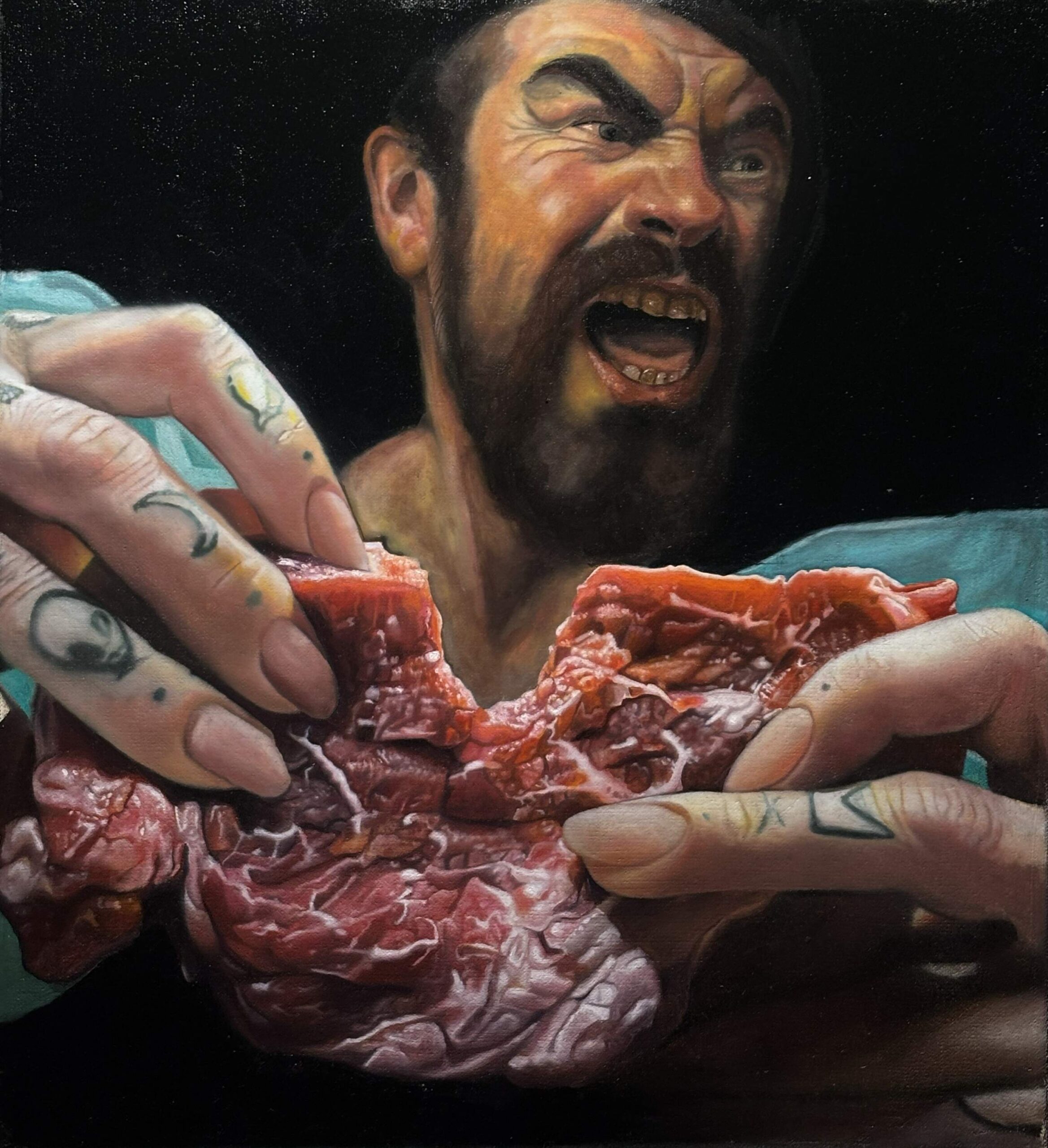
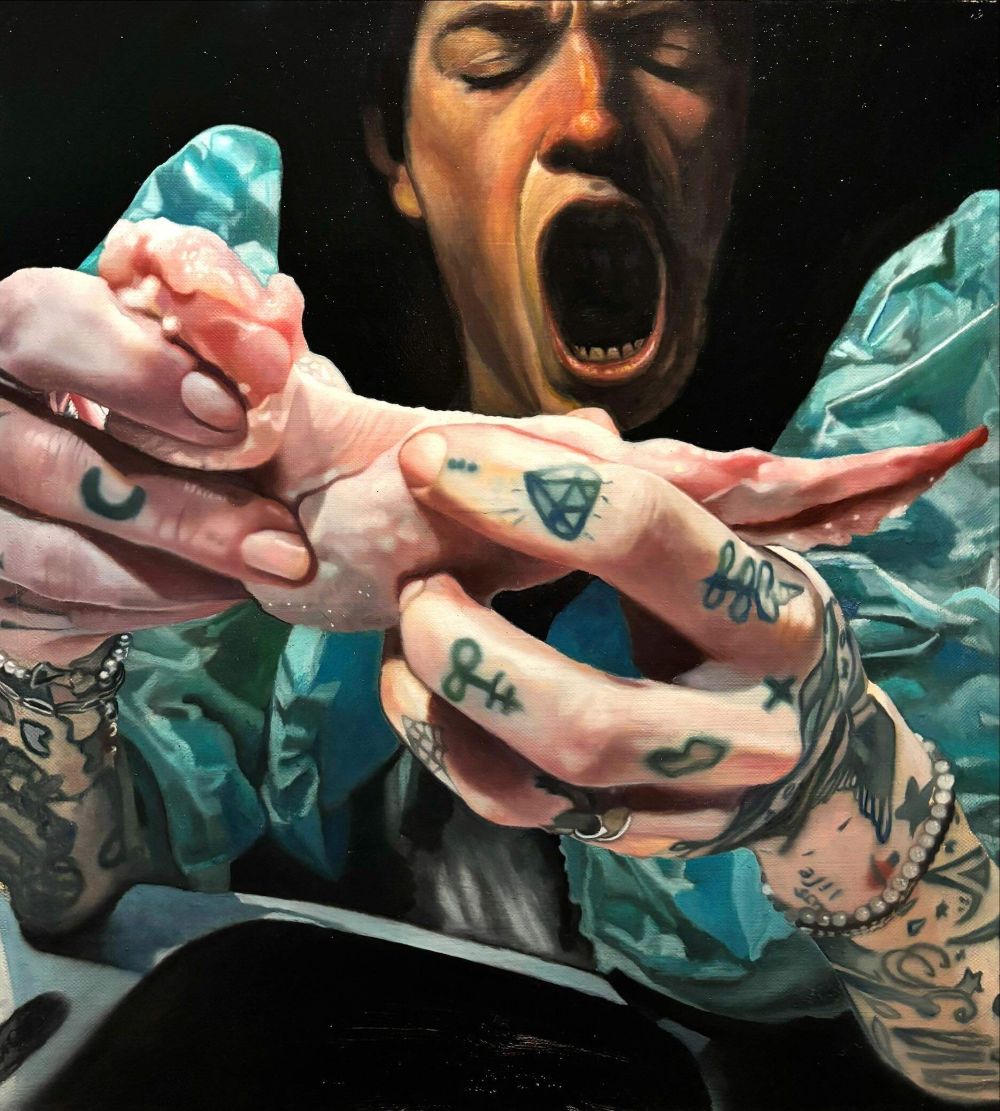
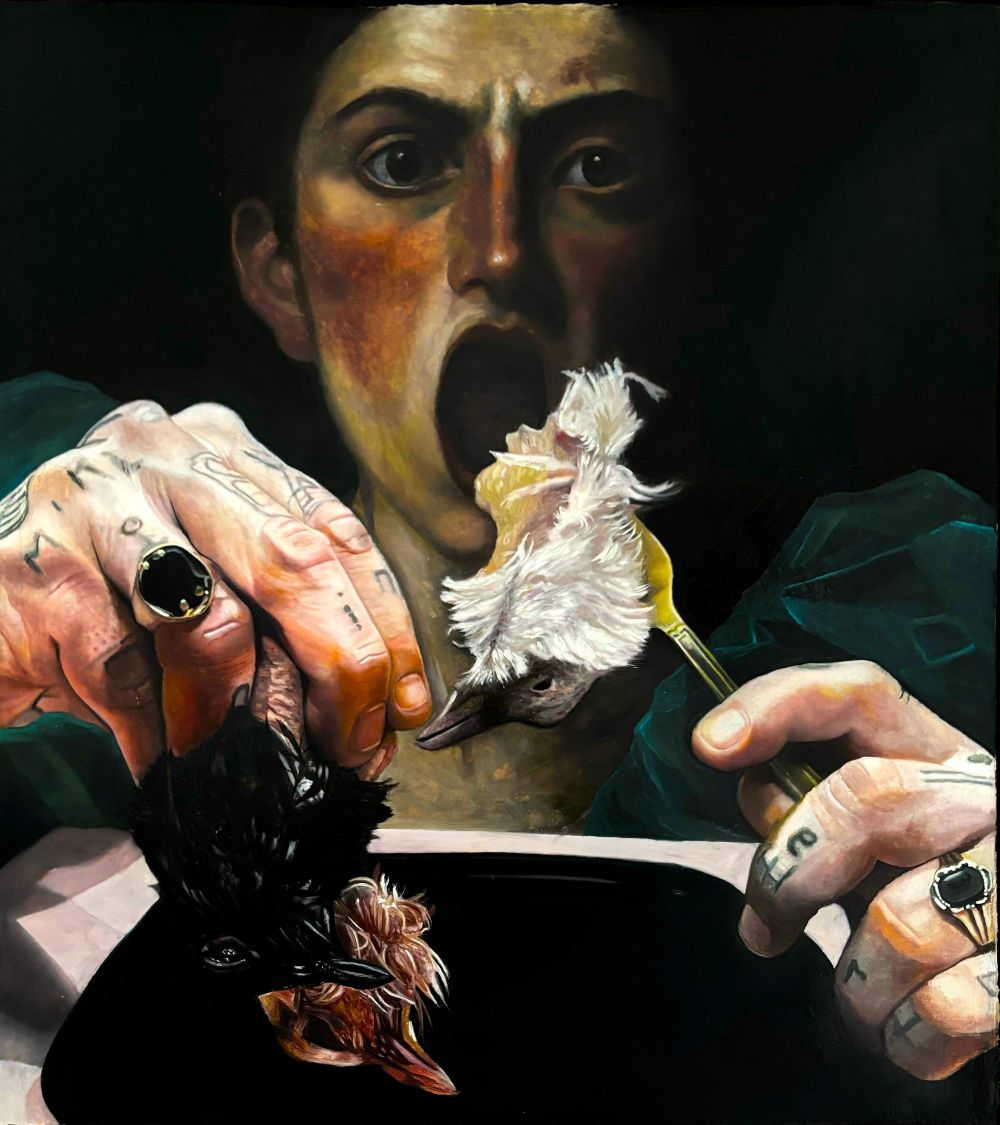
The Iliad opens with anger, and with it one of the oldest epics of Europe. At its height, Achilles wishes to eat his enemy’s flesh raw. Of the whole range of human emotions, it is the one our society today handles with the greatest difficulty, above all where it is acted out toward the outside. Understood as an inner, transforming force, it can turn into a drive. This requires crossing an inner threshold and making contact with what lies beneath the anger: fear, shame, powerlessness, humiliation, feelings that often seem harder to bear than the anger itself.
Anger arises from an apprehension, from the comparison with an earlier experience, or as an innate reaction. When it appears, it fills us so completely that it seems to take possession of the entire body.
The series was made in early 2026, out of the powerlessness before events in the world over which one has no influence. Anger is one of the few answers left to the individual. The series sets two emblems for this. Three portraits after Caravaggio, Van Dyck and Delacroix are turned frontally and their mouths opened. They stand for the older layer, for the comparison with an earlier experience that runs along in every anger, and the mouth is the threshold at which the inner steps outward, before it becomes language. In the foreground, hands and animal flesh, standing for the innate reaction and recalling our own animal nature. A shadow subject, a limit our society covers over rather than acknowledges.
The viewer is led close to what is depicted, a calculated proximity. No way out is left to him, just as none is left to the person in anger while the feeling holds him.
Unique works · Signed