Paintings
Oil on canvas - Original works
Click image for details



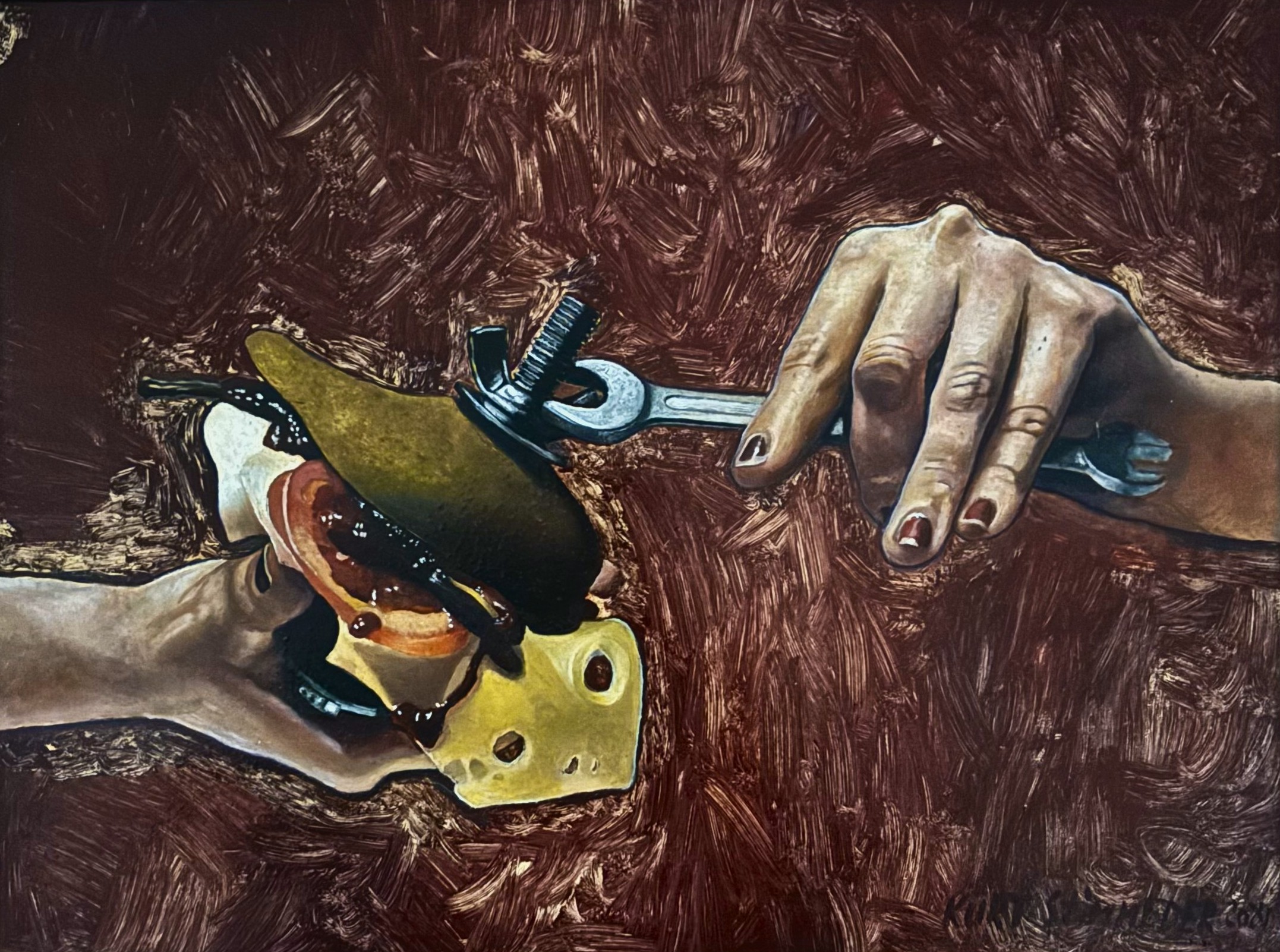
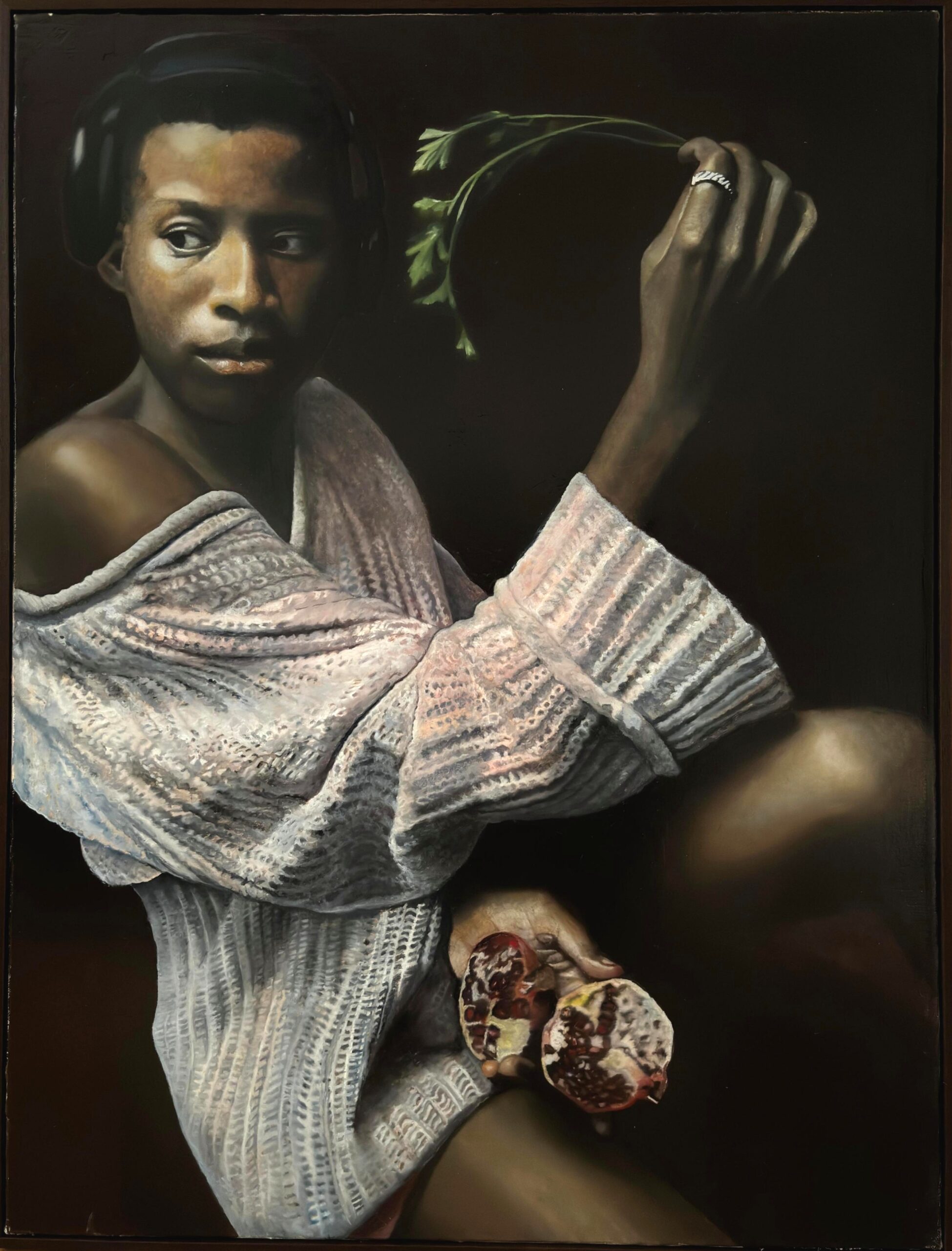
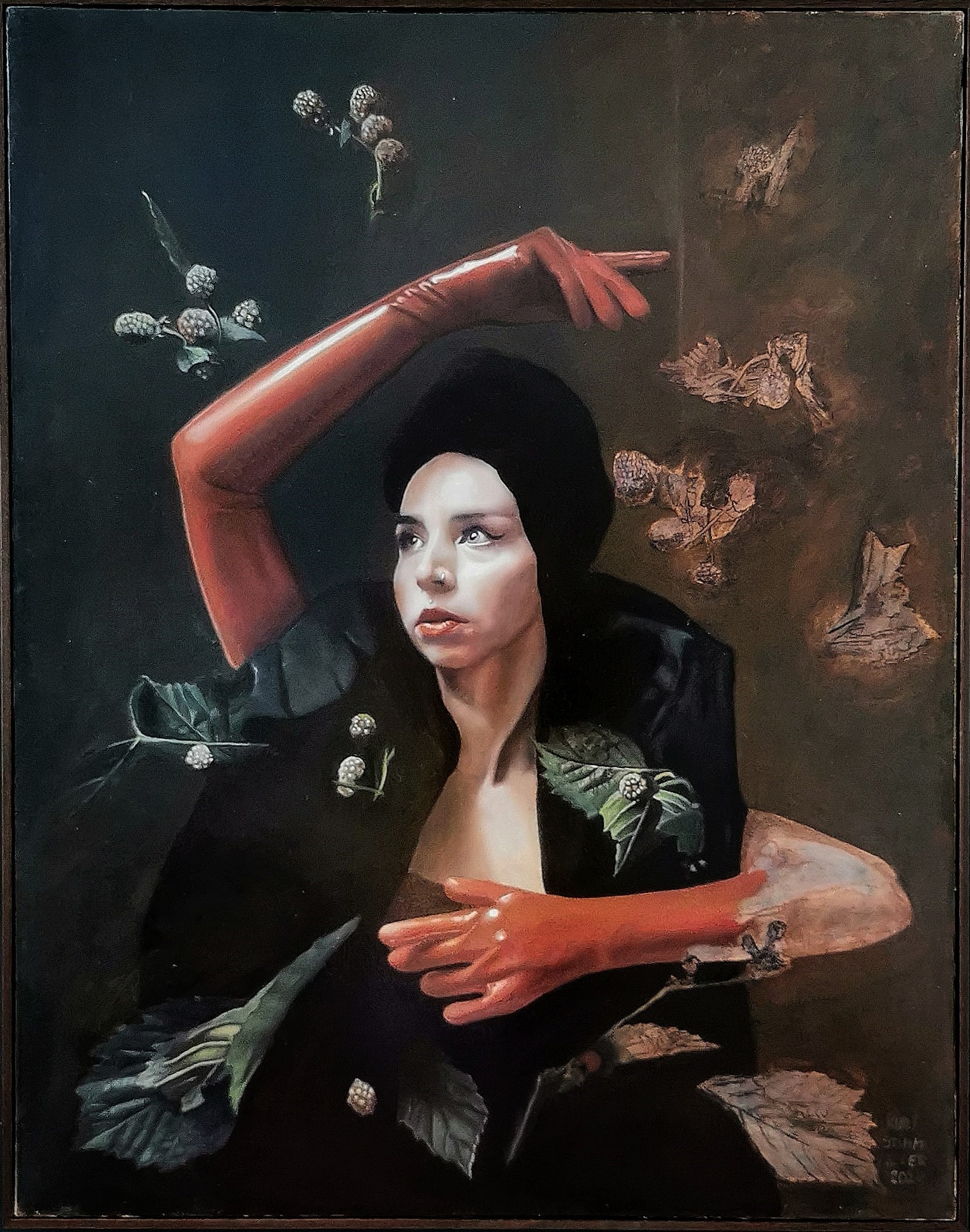
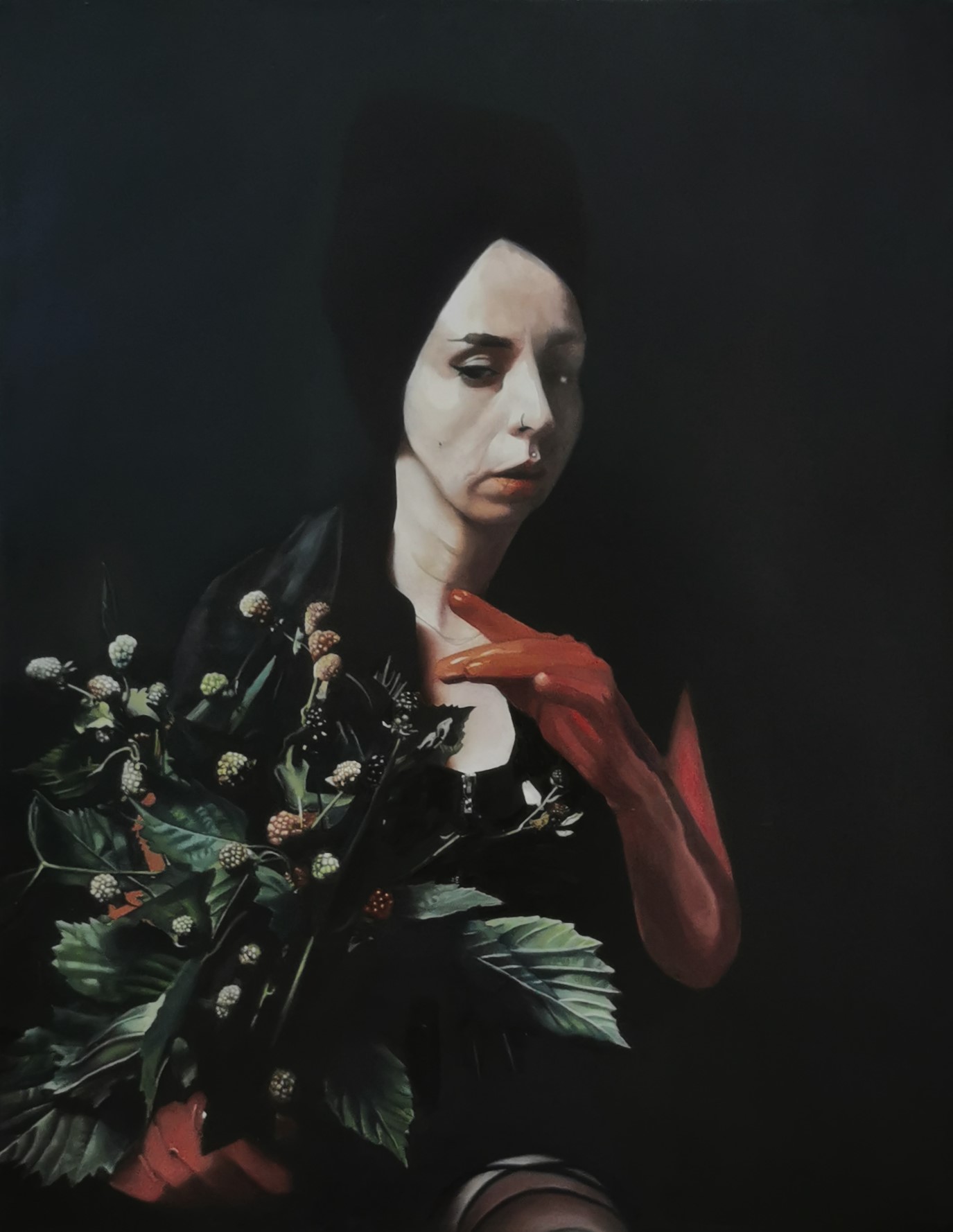
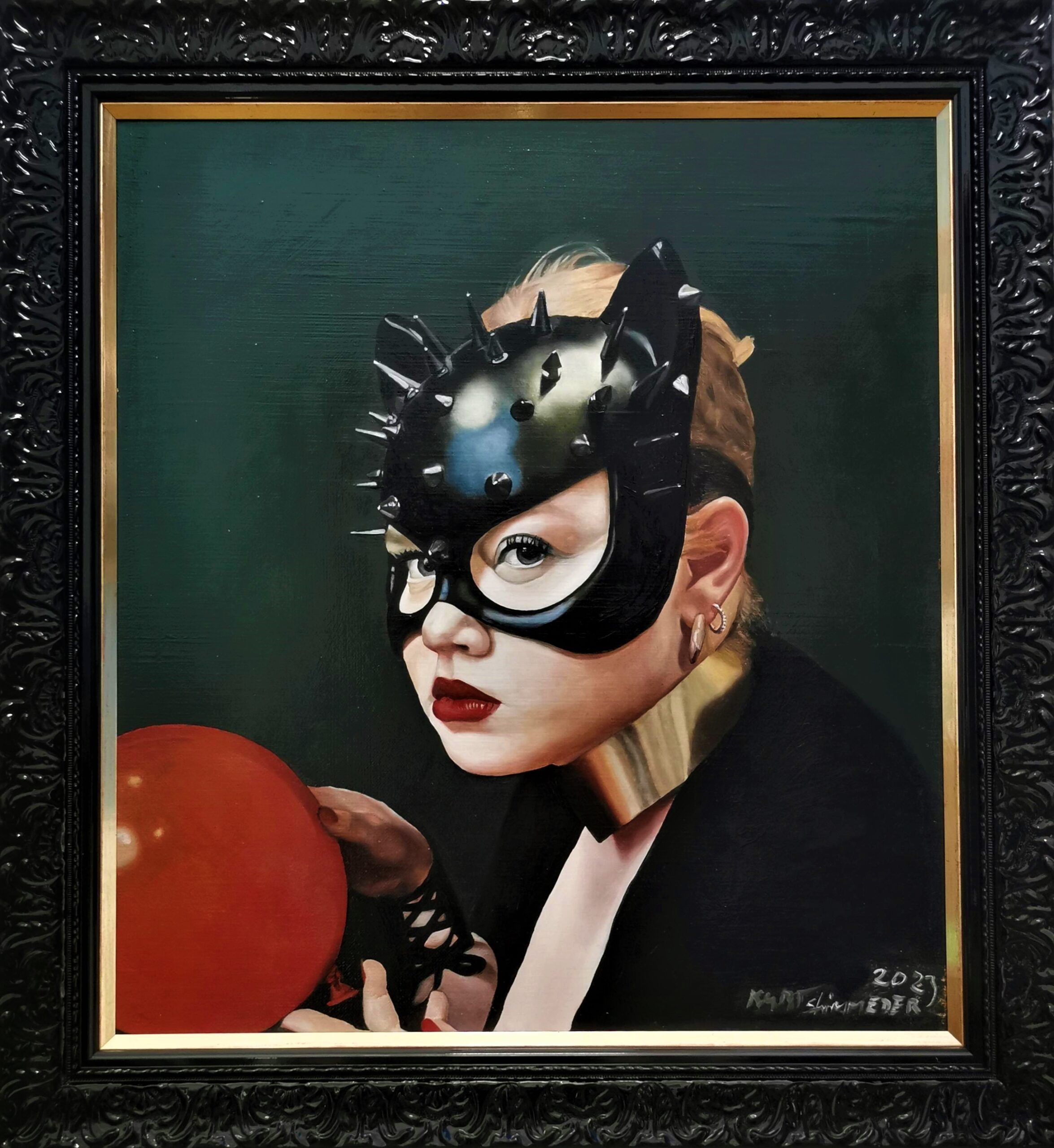
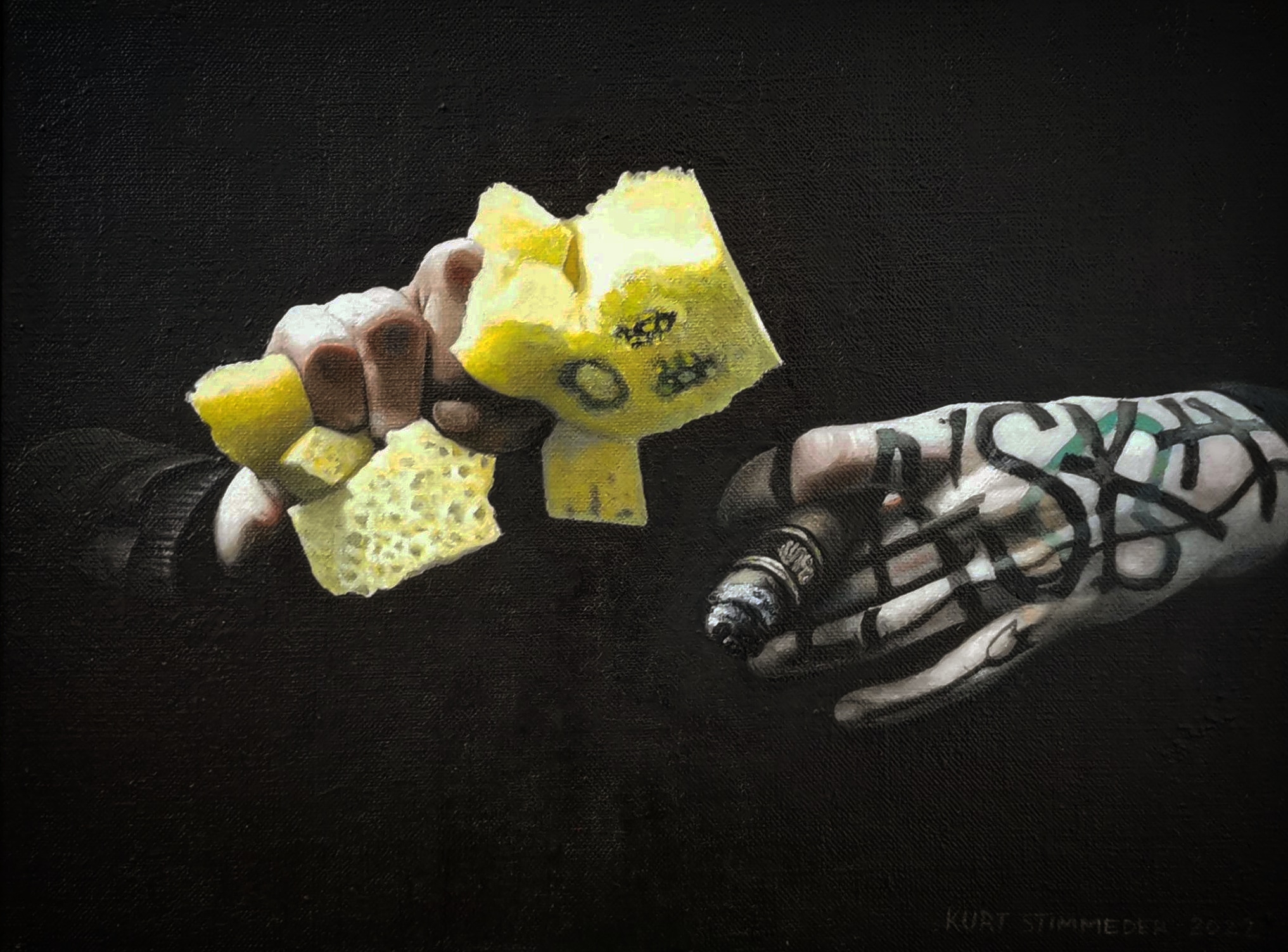
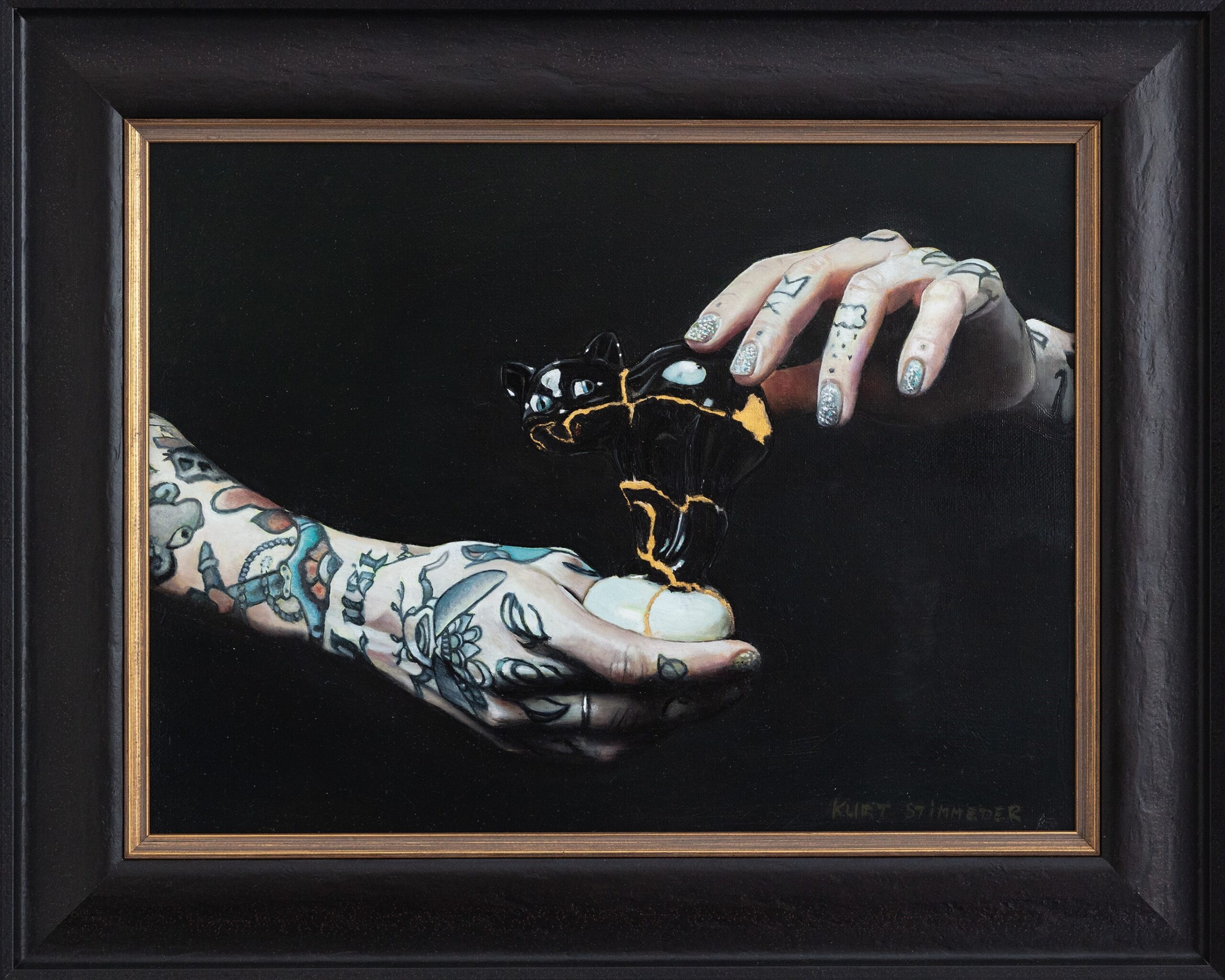
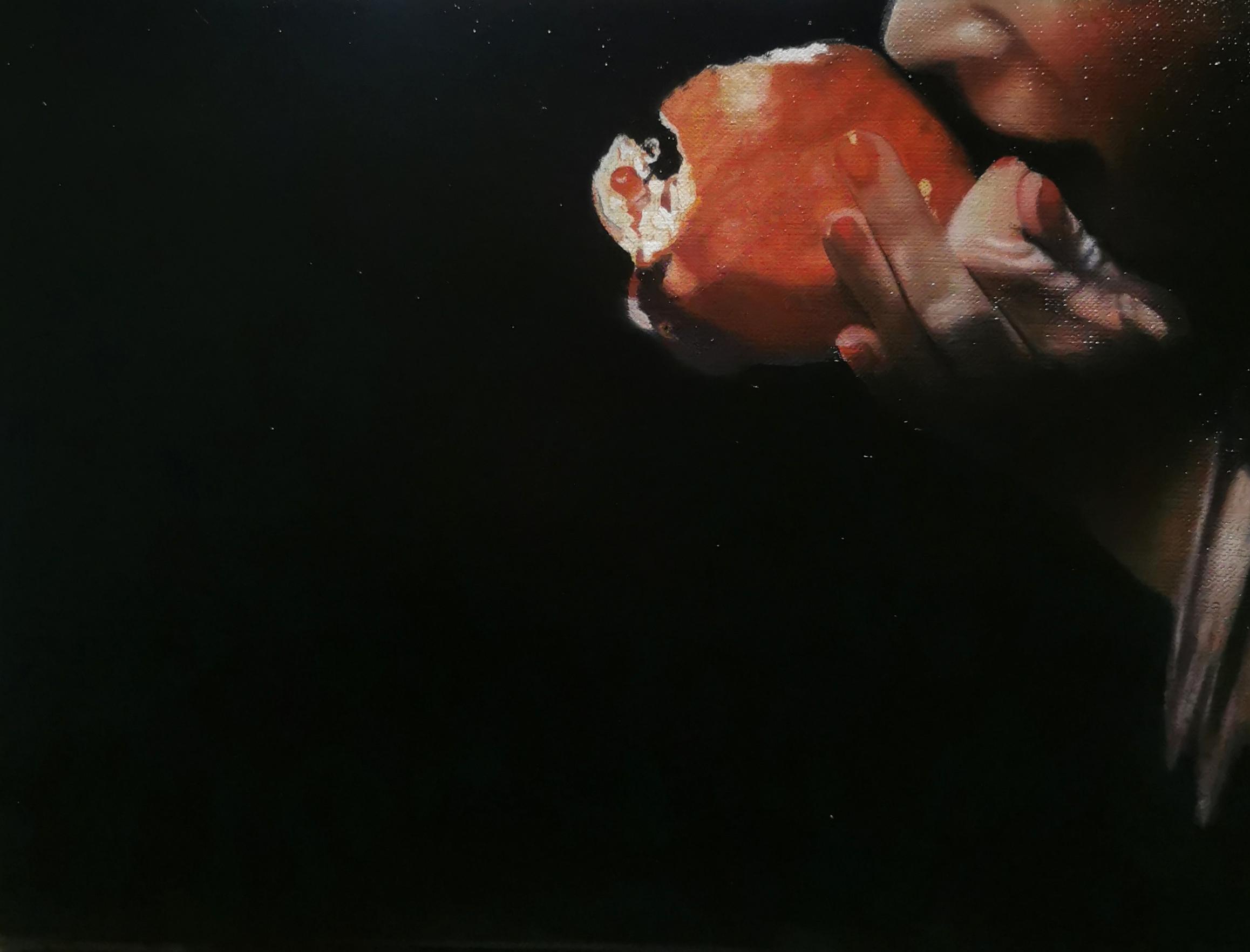


Take a look at the artwork on your wall
Upload a photo of your own room, hang one or more paintings, then drag the corners to match an angled wall. Save the view when you are done.
Click here · The Archive
Early work, studies & commissions
→
Earlier paintings, studies after the Old Masters and commissioned works — an ongoing archive.
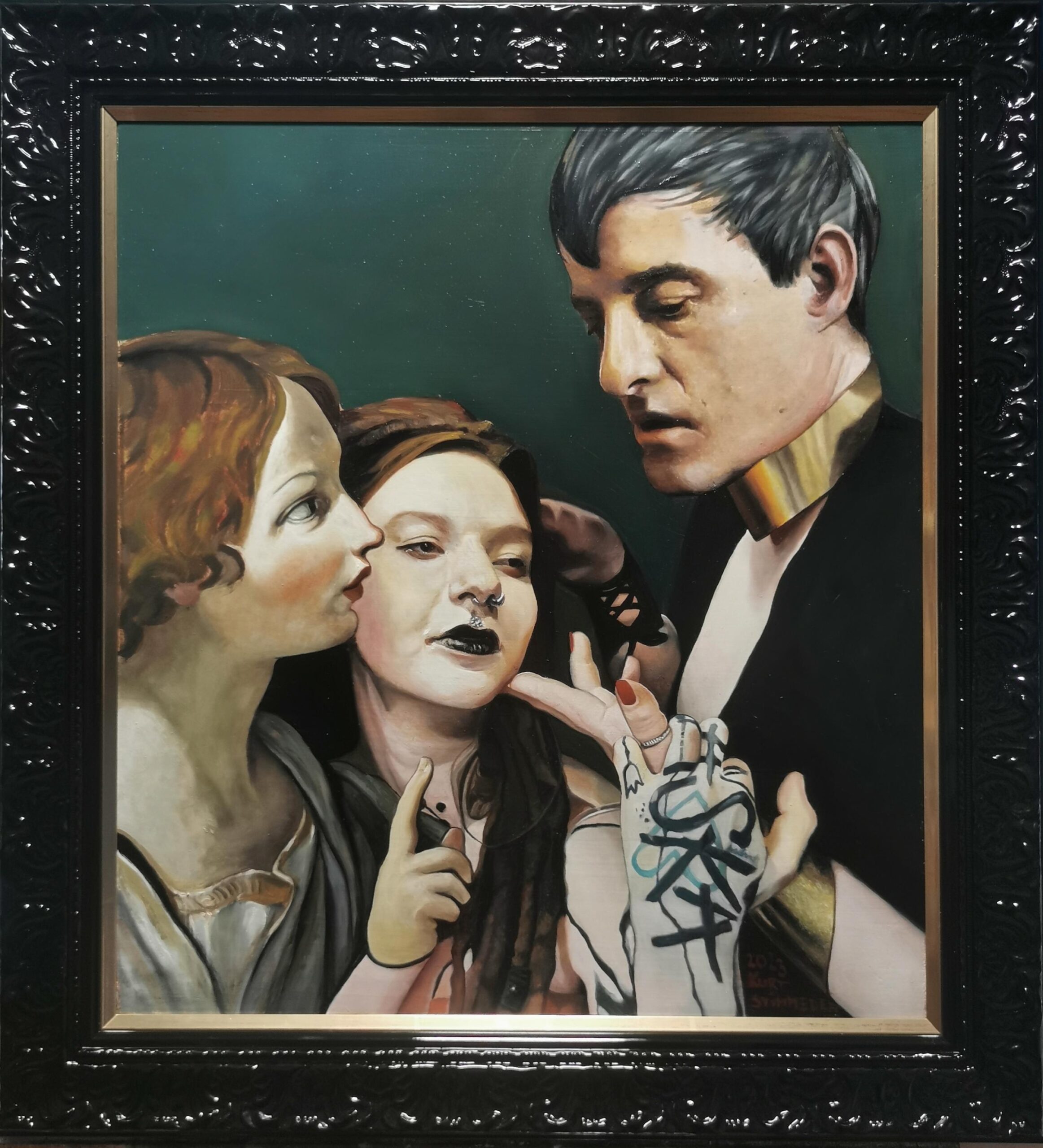
The hand model for this painting is an avid reader of Peter Handke. She once wrote him a letter and waited in vain for an answer. Half joking, I said she might have received one if she had sent him an empty envelope – as a symbol of the blank space, a theme that runs through his books. In the painting her hand points to just such an empty envelope.
The path of the letter also determines the background. It is borrowed from a medieval tapestry and kept in a slightly greenish mail-coach yellow. I replaced the coachman with a robot. The slightly oval wheels stand for hindered movement – for a letter that does not reach its destination.
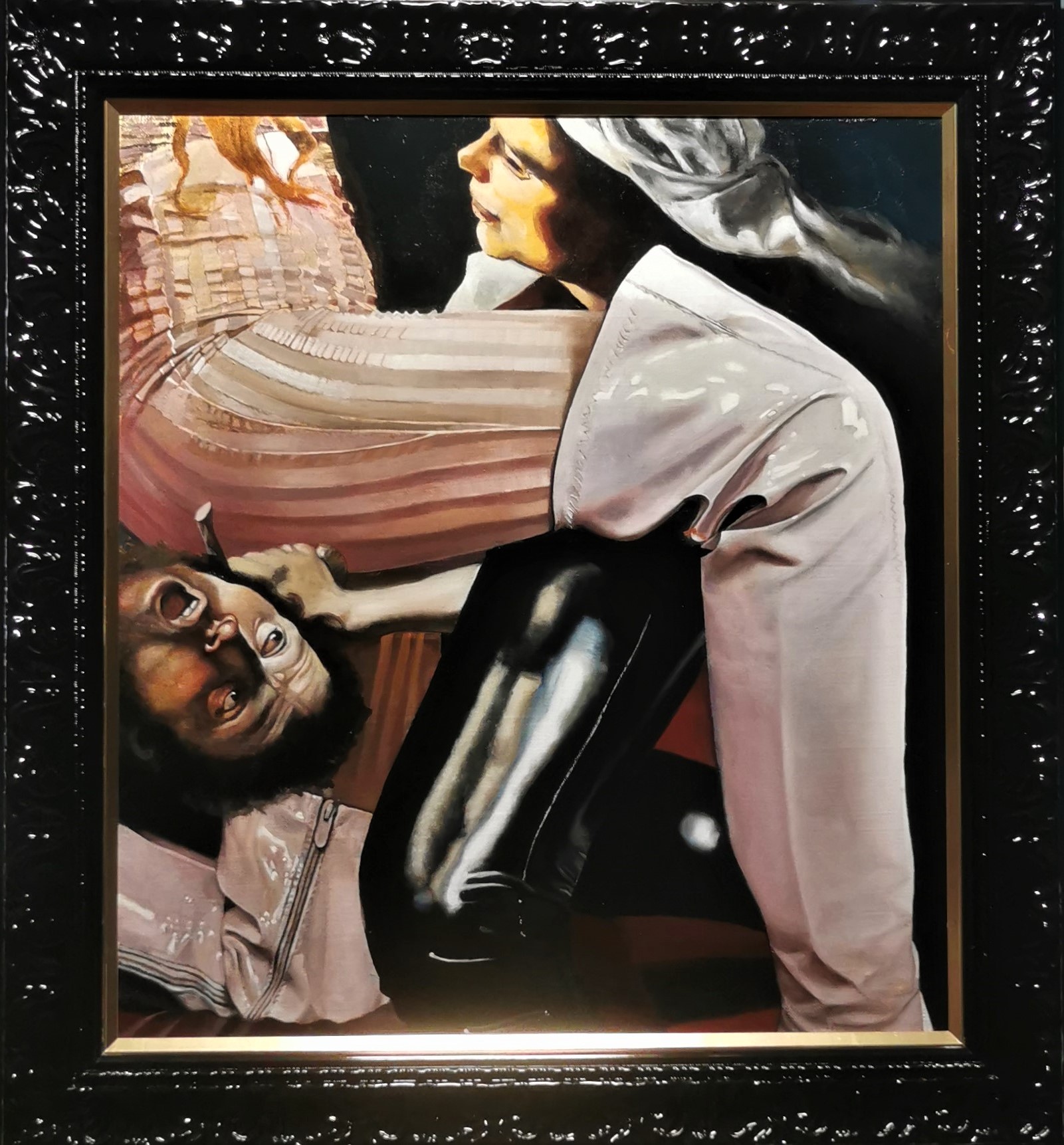
The portrait grew largely out of sketches, as an attempt to unite a face by Caravaggio with one by Delacroix.
The rooster chases the hen. The cat arches its back, next to it a broken egg. The hands are in the yolk. Porcelain heads merge with living bodies. One egg is still whole.
Everything is there, somehow together and yet each for itself, and it does not add up to a clear picture. Here a state stays standing that is normally only preparation and disappears once the picture takes its place. One could say: the picture this is about is not shown at all.
Something is fundamentally different in this work. The results of several lines of development, from this year and from the last, converge here into a single system, unchanged in their symbolic form. On the table the opposites stand lined up side by side: the rooster chasing the hen, the cat whose soft arched back stands diametrically opposed to the hard egg, the whole egg and the crushed one. The hands are in the yolk.
In earlier works this process led to a picture that formed out of the conclusion drawn from these elements. Here the state remains standing that otherwise serves as preparation for the picture, then disappears and is replaced by it. Everything is fully present, set against itself — and does not synthesize. One could say, then, that the picture at issue is not shown at all.
From a Freudian point of view, several parapraxes point to something that perhaps lies so deep that it cannot be represented pictorially either. Or perhaps the method needs to be sharpened further in order to draw the actual picture out of these strands.
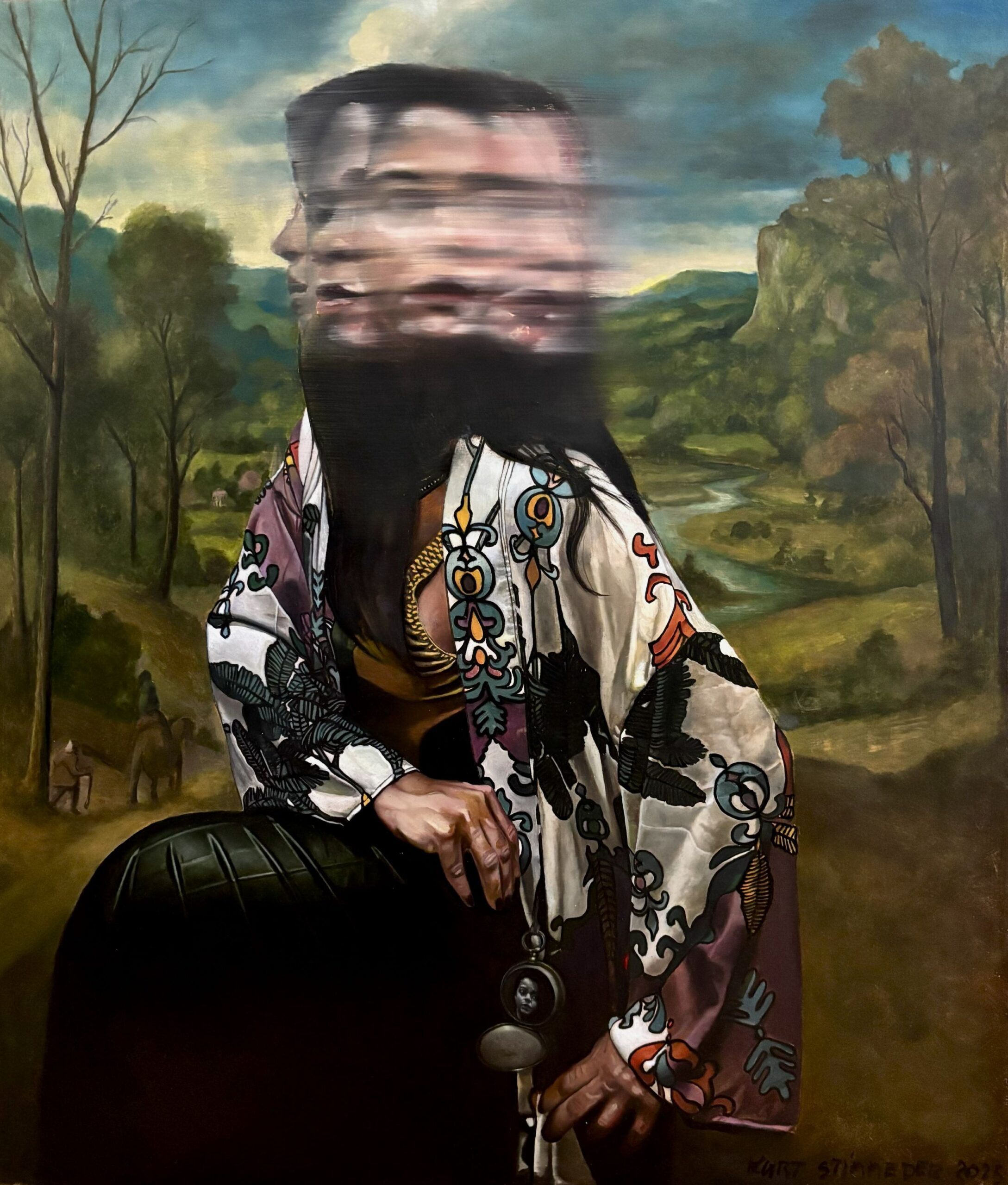
The Heroines Journey depicts a woman in a kimono-like garment, poised as if about to draw a sword. Her head is blurred — a moment of internal tension suspended between resolve and retreat. Instead of a sword, she holds a small pendant containing her own portrait: a symbol of self-assertion and the protection of privacy. The figure resists external expectations while keeping her inner life concealed.
The background shows a medieval landscape that introduces a neo-romantic dimension into the artist's series, previously set in non-spatial environments. The blurred head suggests an identity that refuses full disclosure. The pendant serves as a quiet counterpoint: a personal emblem defending inner boundaries.